FPV Tech in 2026: What's Hot, What's Dead, and Where Your Money Should Go
After 5 years in the Shenzhen supply chain and thousands of dollars burned on bad gear, here's my honest take on the state of FPV hardware -- no brand loyalty, no hype, just what actually works.
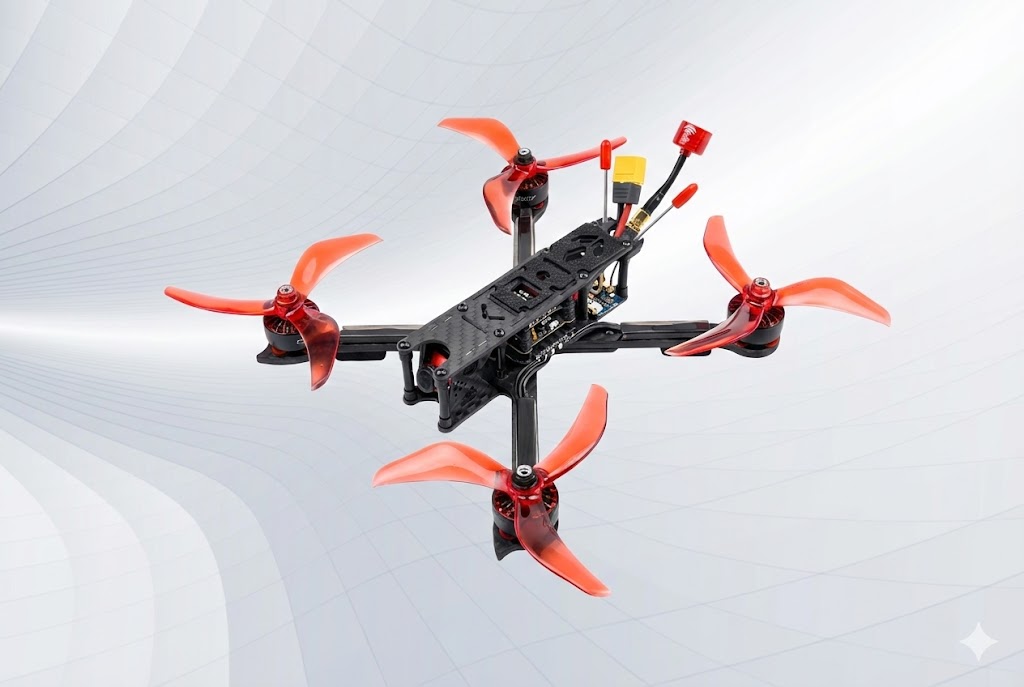
A typical build bench in 2026. The gap between budget and premium has never been smaller.
1. Digital FPV: The War Is Over (Mostly)
If you're still flying analog in mid-2026, you either have a very specific budget constraint or you're competing in a league that mandates it. For everyone else, the digital transition is complete.
Here's the landscape as it stands:
| System | Resolution | Latency | Price (VTX+CAM) | Best For |
|---|---|---|---|---|
| DJI O4 Pro | 4K/120fps | 15-22ms | $220-$270 | Cinema / Long Range |
| Walksnail Avatar HD Pro | 1080p/100fps | 22-28ms | $120-$160 | Racing / Budget HD |
| HDZero Race V3 | 720p/90fps | 3-8ms | $160-$200 | Competitive Racing |
| OpenIPC (RTL8812AU) | 1080p/60fps | 15-30ms | $40-$80 | Tinkerers / Budget |
TL;DR: DJI O4 is the undisputed king of image quality. Walksnail owns the mid-range. HDZero is untouchable for racing. And OpenIPC is the wildcard -- rough around the edges but improving fast and absurdly cheap.
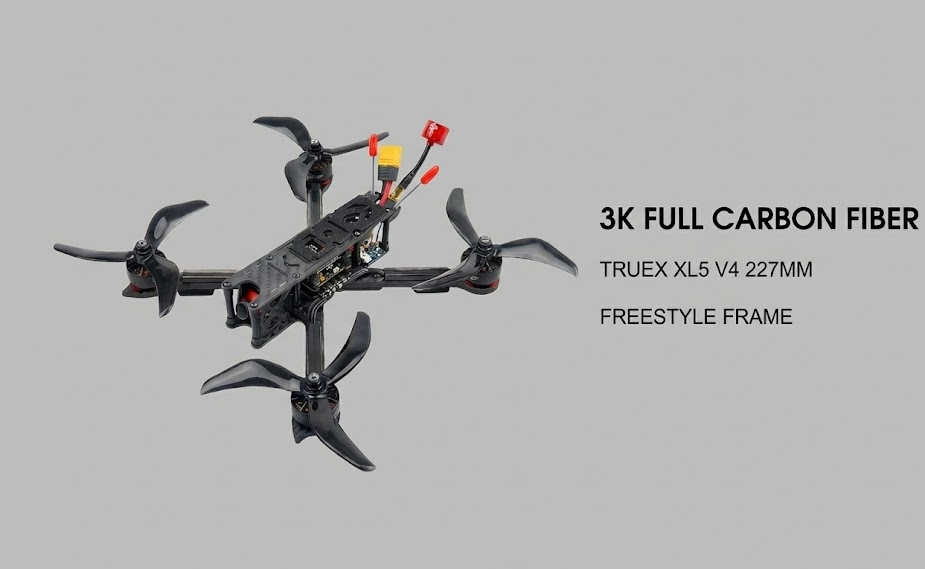
DVR comparison: DJI O4 (left) vs Walksnail Avatar HD Pro (right). The gap narrows every firmware update.
The OpenIPC Disruption
This is the story nobody on r/fpv is talking about enough. OpenIPC -- an open-source firmware project originally for IP cameras -- has been ported to FPV hardware. The result? Digital FPV for under $80.
It's not plug-and-play. You'll spend hours configuring it. The image breaks up differently than DJI. But at $40-80 for a complete VTX+CAM setup, it's democratizing digital FPV in a way that terrifies the big three.
My prediction: by late 2026, OpenIPC will be the default recommendation for budget builds on r/fpv. If you're buying B2B, keep an eye on compatible hardware -- the demand curve is about to go vertical.
2. ExpressLRS: The Radio Link Monopoly
Remember when we used to argue about Crossfire vs Tracer vs Ghost? Those debates are archaeological now. ExpressLRS has won. Completely. Decisively.
The latest ELRS 4.0 firmware (released March 2026) brought:
- Gemini X-band support -- dual-frequency 2.4GHz + 900MHz on a single module for true redundancy
- 500Hz packet rate as standard (was 1000Hz experimental in 3.x)
- Dual-band telemetry that actually works at 30km+ range
- Backpack ESP-NOW mesh for ground-station-to-goggle relay without extra hardware
If you're building in 2026: buy an ELRS radio (Radiomaster Boxer Crush or Jumper T25) and an ELRS receiver (HappyModel EP1 or BetaFPV SuperD). Don't overthink this. There is no second option worth considering.
3. AIO Flight Controllers: The Stack Killer
All-In-One boards (FC + ESC on a single PCB) have gone from "fire hazard" to "actually good" in about 18 months. The turning point was BLHeli_32 revival on AM32 firmware and improved thermal design.
Current top picks:
- SpeedyBee F405 AIO 45A -- The gold standard for 3-5" builds. AM32, 6 UARTs, onboard ELRS option. $65.
- JHEMCU GHF405AIO-HD -- Best budget option. F405, 40A, plug-and-play DJI O4 connector. $42.
- Flywoo GOKU F745 AIO -- The premium choice for 5-7" long range. 55A, F745, barometer built in. $89.
An AIO FC (left) vs a traditional two-board stack (right). Same functionality, half the weight, one-third the wiring.
The weight savings alone (8-15g vs 18-30g for a stack) make AIOs the default choice for anything under 5 inches. For 5" freestyle, I still prefer a traditional stack for crash durability -- but the gap is closing.
4. Motors: Diminishing Returns Are Real
Here's where I'm going to save you money. The $35 motor is 95% as good as the $65 motor.
The 2025-2026 motor market has reached a plateau. Chinese manufacturers (RCINPOWER, iFlight, T-Motor, BrotherHobby) are all using the same N54/N52SH arc magnets, the same 220-degree stator coatings, and the same Japanese NMB bearings. The difference between a $35 RCINPOWER Smoox 2306 and a $65 premium equivalent is maybe 3% more thrust and slightly better crash survival.
What actually matters:
- Stator size matches your prop -- 2207 for 5" freestyle, 2004 for 3.5", 1404 for 3"
- KV matches your battery -- 1700-1950KV for 6S 5", 3500-4000KV for 4S 3.5"
- Curved magnets (N52SH arc) -- Smoother, more efficient, worth the $5 premium
- Skip the titanium shafts -- They're 1.2g lighter but bend easier than steel. Not worth it for freestyle.
5. Batteries: HV LiPo Is the New Standard
High-Voltage LiPos (4.35V/cell instead of 4.20V) have crossed the tipping point. Every major brand now ships HV packs as their default.
What changed? Cycle life. Early HV packs degraded after 50 cycles. Current gen (CNHL Black Series HV, GNB Purple, Ovonic X-HV) reliably hit 150+ cycles with only 5-8% capacity loss -- matching standard LiPo longevity.
The math is simple: a 6S 1300mAh HV pack stores 33.9Wh vs 31.2Wh for a standard pack. That's 8.6% more energy in the same weight and form factor. There's no downside anymore.
The 2026 FPV Build Manifesto
If you handed me $400 and said "build the best 5-inch freestyle quad possible," here's exactly how I'd spend it:
- Frame: Source One V5 or Mark5 clone ($35) -- carbon quality is indistinguishable from $90 frames now
- AIO/Stack: SpeedyBee F405 AIO 45A ($65) -- one board, less wiring, less failure points
- Motors: RCINPOWER Smoox 2306 1880KV ($42/set) -- 95% of premium performance at 60% of the price
- VTX + CAM: Walksnail Avatar HD Pro kit ($140) -- best value in digital FPV right now
- RX: HappyModel EP1 ELRS ($14) -- dual antenna, 500Hz, done
- GPS: Flywoo GOKU M10 ($22) -- 25 satellites in 8 seconds cold start
- Battery: CNHL Black HV 6S 1300mAh x2 ($50) -- the new standard
Total: ~$368. This quad will out-fly anything you could have built for $800 in 2023. That's how fast this industry moves.
6. What's Actually Dead in 2026
Some things need to be called out. Stop buying these:
- Individual ESCs (on arms) -- Dead for 5" and below. AIO boards are better in every metric except crash replacement cost, and they crash just fine.
- FrSky anything -- The ACCST/D16/D8 ecosystem is a compatibility nightmare. ELRS does everything better for less money.
- F4 flight controllers (for new builds) -- F405 still works, but F745/H743 is the same price now. More UARTs, more headroom, no reason to buy F4.
- 4S batteries for 5" builds -- 6S HV is the standard. 4S is for micros and whoops.
- Carbon fiber "upgrade" arms at 2x markup -- They're all cut from the same T700 sheets in the same 5 factories in Dongguan. Branded frame arms are the biggest margin item in this industry.
7. The Supply Chain Reality Nobody Discusses
Since I literally work in Shenzhen's drone hardware ecosystem, let me give you a peek behind the curtain.
That $90 "premium" frame you're buying? The raw carbon cost is $4-8. CNC cutting and chamfering adds $6-10. Hardware (screws, standoffs, TPU parts) is $2-4. The brand adds $70 of margin.
That $35 motor? The bill of materials is about $11. N54 magnets ($3), NMB bearings ($2.50), copper winding ($1.50), stator steel ($1), bell aluminum ($2), assembly labor ($1).
Huaqiang North, Shenzhen. This is where 80% of the world's FPV components begin their journey.
I'm not saying brands don't add value -- they do R&D, they provide warranty, they sponsor pilots and events. But if you're buying B2B or building at volume, going factory-direct cuts your component costs by 40-60%. That's not a secret. That's just how the supply chain works.
Final Thoughts
2026 is the best year in FPV history to be a builder. The hardware has never been cheaper, the performance ceiling has never been higher, and the gap between "budget" and "premium" has never been narrower.
If you're a hobby shop, a racing team, or a drone startup -- the smartest thing you can do right now is go direct to the source. The Shenzhen ecosystem that built DJI also builds the parts you fly. Use it.

Written by the MechFPV Team
We're based in Shenzhen, China -- the global capital of drone manufacturing. We write about FPV hardware, supply chain, and building better drones for less money. Got questions? Hit us on WhatsApp or send an inquiry.