Accessories
Raspberry Pi 5 - 8GB |Wholesale & OEM PARTS SOURCED FORM SHENZHEN
Specifications
Raspberry Pi 5 - 8GB
What is Raspberry Pi 5?
Featuring a 64-bit quad-core Arm Cortex-A76 processor running at 2.4GHz, Raspberry Pi 5 delivers a 2-3x increase in CPU performance compared to Raspberry Pi 4. Raspberry Pi 5 also comes with a wide range of exciting new features and improvements, making it the best Raspberry Pi ever made.
Welcome to the latest generation of Raspberry Pi: the computer for everything.
What's New in Raspberry Pi 5
2-3x CPU performance boost
At the heart of Raspberry Pi 5 is a new 64-bit quad-core Arm Cortex-A76 processor running at 2.4GHz, with cryptographic extensions, 512KB per-core L2 caches, and a 2MB shared L3 cache.
This new Broadcom BCM2712 SoC (System on Chip) delivers a 2-3x performance increase over the previous generation of Raspberry Pi.
Improved graphics with dual 4Kp60 display output
Raspberry Pi 5 delivers a significant graphics performance boost thanks to the 800MHz VideoCore VII GPU connected to the BCM2712 via PCI Express.
This enables Raspberry Pi 5 to provide full dual 4Kp60 display output over micro HDMI. These performance improvements ensure a smooth desktop experience when browsing the web and streaming video.
Advanced I/O capabilities including PCIe!
For the first time, this is a full-size Raspberry Pi computer using silicon designed in-house by Raspberry Pi.
The RP1 "south bridge" provides the majority of I/O capabilities for Raspberry Pi 5 and delivers a step-change in peripheral performance and functionality.
- Total USB bandwidth has more than doubled, providing higher transfer speeds to external UAS drives and other high-speed peripherals
- MicroSD card performance is doubled thanks to support for SDR104 high-speed mode
- A single-lane PCI Express 2.0 interface provides support for high-bandwidth peripherals.
Dual camera/display (CSI/DSI) connectors included!
The RP1 also provides a dual quad-lane 1.5Gbps MIPI transceiver, tripling total bandwidth and enabling new dual CSI/DSI connectors that support up to two cameras or displays in any combination.
Combined with image performance improvements from the redesigned Raspberry Pi Image Signal Processor (ISP), this opens up new project opportunities and major improvements for those using Raspberry Pi 5 in commercial and industrial applications.
Power button
Makers and enthusiasts have wanted a dedicated onboard power button on Raspberry Pi for as long as we can remember — and Raspberry Pi 5 finally delivers this much-requested convenience!
Real-time clock (RTC)
The onboard real-time clock allows you to retain the time/date when the device is powered off or not connected to the internet (when a backup battery is connected). A dedicated header has been added to the board to support backup batteries for the RTC (battery sold separately). A lithium battery with a compatible header will be available at or shortly after the Raspberry Pi 5 launch.
Dedicated fan header
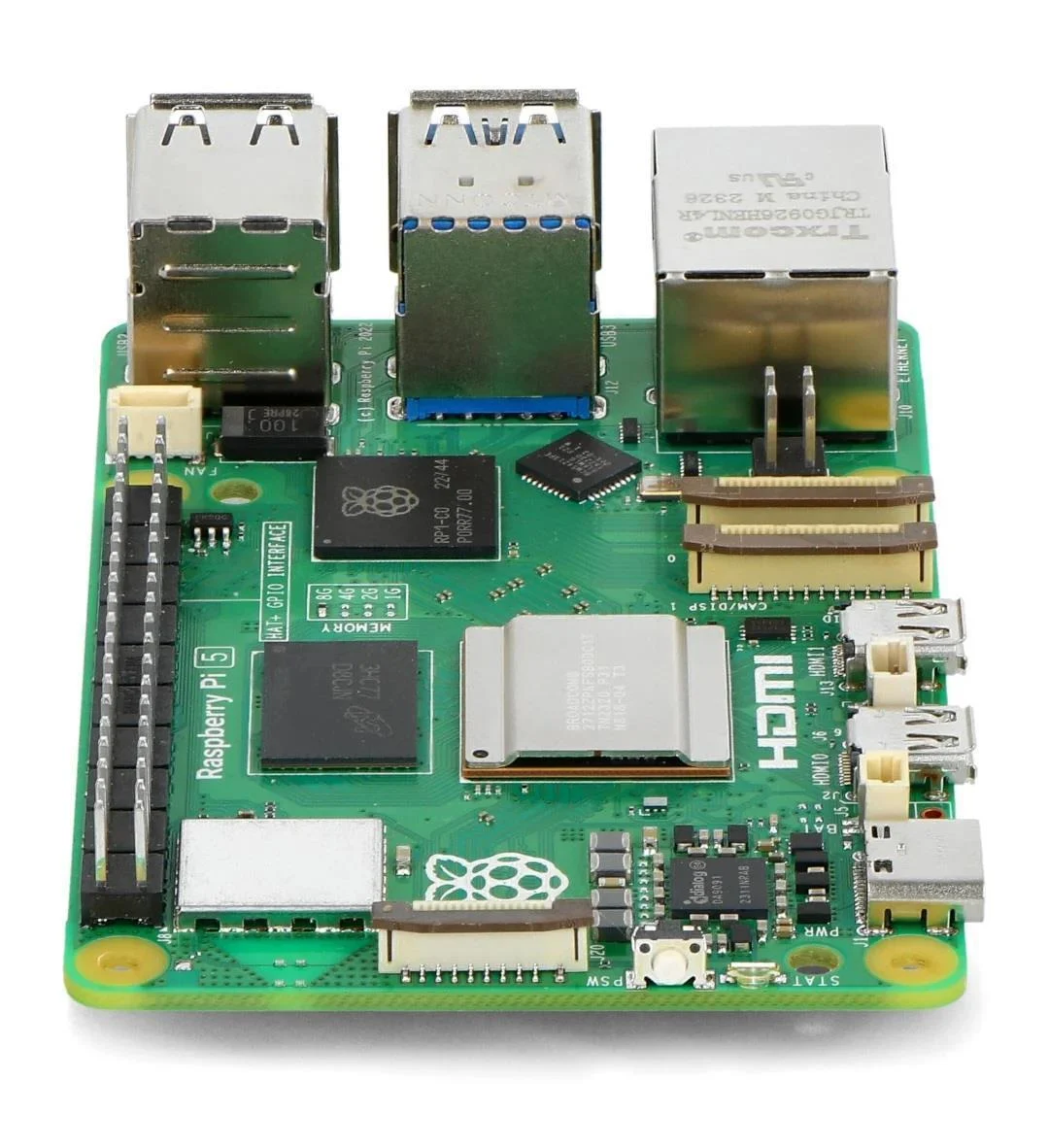
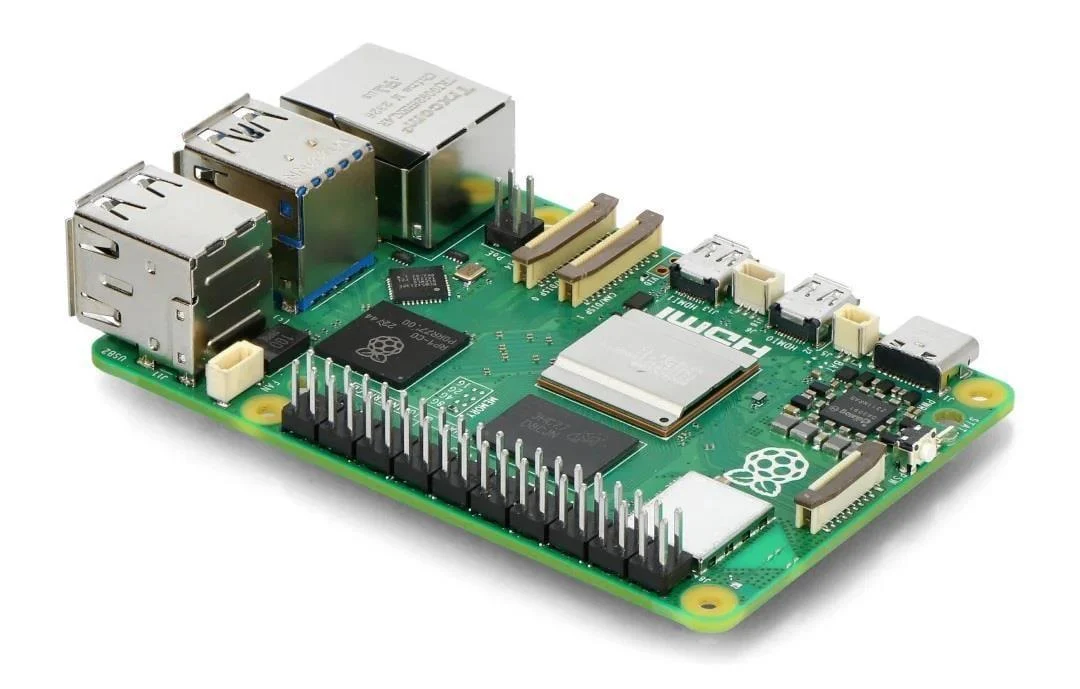
Raspberry Pi 5 includes a new dedicated fan header located to the right of the familiar GPIO pin header, allowing you to connect and run a cooling fan without interfering with your GPIO-connected devices. You can now add HATs and other accessories without the need for workarounds to connect a fan. The official Raspberry Pi 5 case and Active Cooler use a JST connector for this dedicated header.
Dedicated UART header
Another useful addition to Raspberry Pi 5 is a dedicated UART header. You can now debug and control your Raspberry Pi 5 without interfering with your GPIO pins. This dedicated UART header also enables boot-time debugging and is designed for use with the Raspberry Pi Debug Probe for fast, convenient debugging.
Additional improvements and changes
- Mounting holes for heatsinks/coolers (designed for the Raspberry Pi Active Cooler)
- Composite video header
- Memory indicator markings for easy board RAM identification
- Unique board serial number on both board and packaging
- PoE header relocated
- Audio input removed
- Wash-down of the underside of GPIO pins
- Metal support standoffs to protect components on the underside
Raspberry Pi 5 Technical Specifications
Processor
- 2.4GHz quad-core 64-bit Arm Cortex-A76 CPU with cryptographic extensions
- 512KB per-core L2 cache
- 2MB shared L3 cache
Graphics
- VideoCore VII GPU supporting OpenGL ES 3.1 and Vulkan 1.2
- Dual 4Kp60 HDMI® display output with HDR support
- 4Kp60 HEVC decoder
Memory & Connectivity
- LPDDR4X-4267 SDRAM (4GB and 8GB available at launch)
- Dual-band 802.11ac Wi-Fi®
- Bluetooth 5.0 / Bluetooth Low Energy (BLE)
I/O
- MicroSD card slot supporting high-speed SDR104 mode
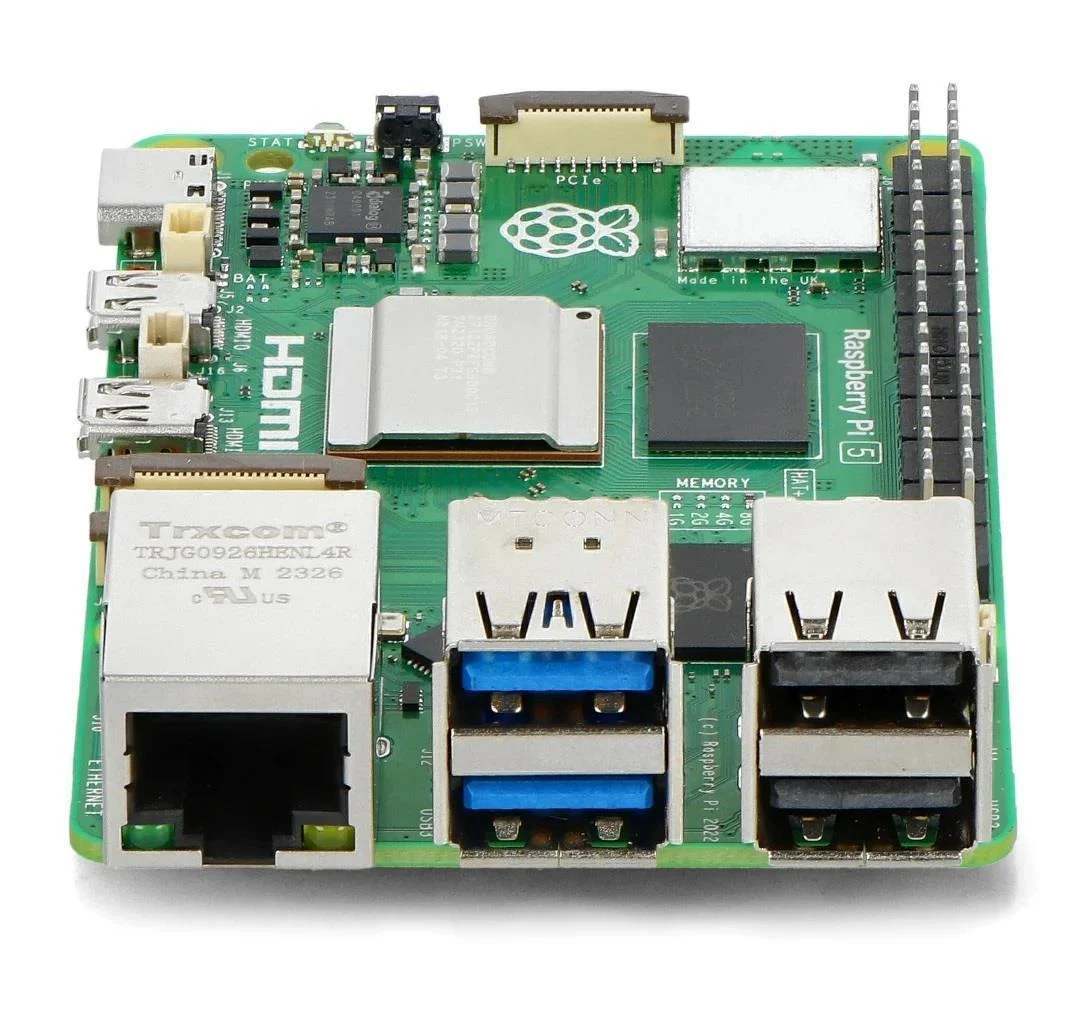
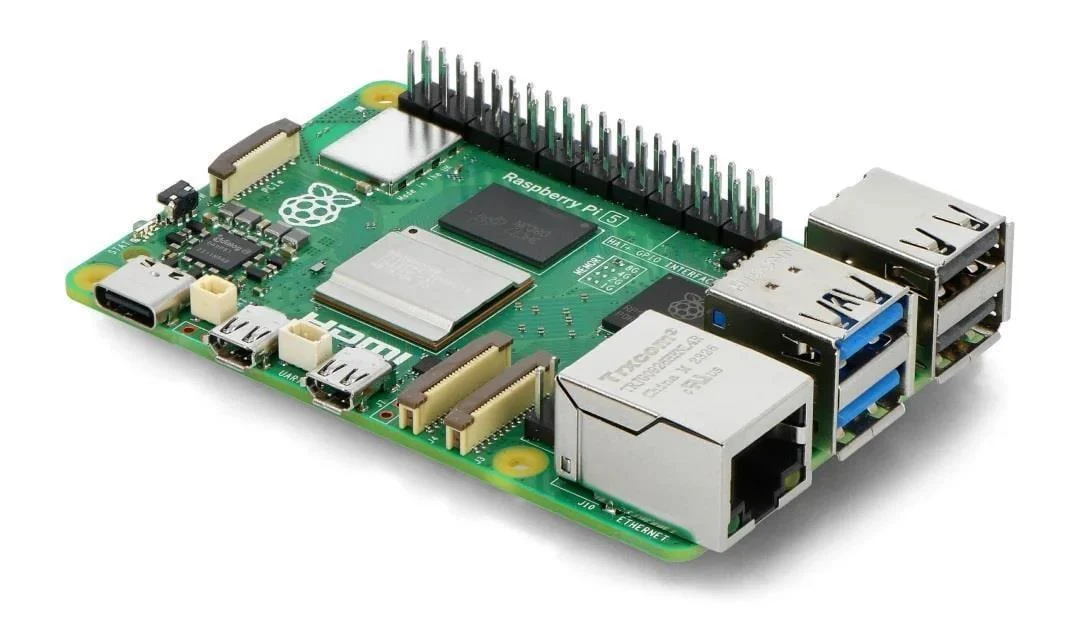
- 2x USB 3.0 ports supporting simultaneous 5Gbps operation
- 2x USB 2.0 ports
- Gigabit Ethernet with PoE+ support (requires separate PoE+ HAT for Pi 5)
- 2x four-lane MIPI camera/display transceivers
- PCIe 2.0 x1 interface for fast peripherals (requires separate M.2 HAT or other adapter)
- 5V/5A DC power via USB-C with Power Delivery support
- Raspberry Pi standard 40-pin GPIO header
- Real-time clock (RTC) powered by external battery (sold separately)
- Power button